
Stories and Poems for Extremely Intelligent Children of All Ages
Selected by — Harold Bloom
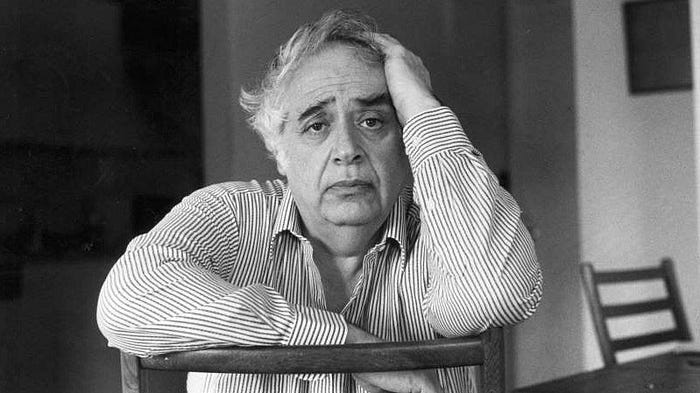
“If readers are to come to Shakespeare and to Chekhov, to Henry James and to Jane Austen, then they are best prepared if they have read Lewis Carroll and Edward Lear, Robert Louis Stevenson and Rudyard Kipling,” — Harold Bloom.
This is the collection of Poems and Stories handpicked by Harold bloom, one of the most celebrated literary critics, for the book “Stories and Poems for Extremely Intelligent Children of All Ages” to inspire young readers.
His recommendations has some surprising inclusions like Leo Tolstoy, Maupassant, apart from the regular names you would find in Children Literature. This is a small attempt to collate the best poems and stories suggested by Mr. Bloom, which are available online for free. Enjoy Reading!
Disclaimer: All rights belong to their respective owners. I do not own any of this content. This book is available in Amazon. You can also find a soft copy in google books, but lot of pages are removed for legal reasons.
The Human Season by John Keats
Four Seasons fill the measure of the year;
There are four seasons in the mind of man:He has his lusty Spring, when fancy clear
Takes in all beauty with an easy span:He has his Summer, when luxuriously
Spring’s honied cud of youthful thought he lovesTo ruminate, and by such dreaming high
Is nearest unto heaven: quiet covesHis soul has in its Autumn, when his wings
He furleth close; contented so to lookOn mists in idleness—to let fair things
Pass by unheeded as a threshold brook.He has his Winter too of pale misfeature,
Or else he would forego his mortal nature.
The Song of the Four Winds by Thomas Love Peacock
Wind from the north: the young spring day
Is pleasant on the sunny mead;
Tho’ merry harps at evening play;
The dance gay youths and maidens lead:
The thrush makes chorus from the thorn:
The mighty drinker fills his horn.Wind from the east: the shore is still;
The mountain-clouds fly tow’rds the sea;
The ice is on the winter-rill;
The great hall fire is blazing free:
The prince’s circling feast is spread:
Drink fills with fumes the brainless head.Wind from the south: in summer shade
‘Tis sweet to hear the loud harp ring;
Sweet is the step of comely maid,
Who to the bard a cup doth bring:
The black crow flies where carrion lies:
Where pignuts lurk, the swine will work.Wind from the west: the autumnal deep
Rolls on the shore its billowy pride:
He, who the rampart’s watch must keep,
Will mark with awe the rising tide:
The high springtide, that bursts its mound,
May roll o’er miles of level ground.
Wind from the west: the mighty wave
Of ocean bounds o’er rock and sand;
The foaming surges roar and rave
Against the bulwarks of the land:
When waves are rough, and winds are high,
Good is the land that’s high and dry.
Wind from the west: the storm-clouds rise;
The breakers rave; the whirlblasts roar;
The mingled rage of the seas and skies
Bursts on the low and lonely shore:
When safety’s far, and danger nigh,
Swift feet the readiest aid supply.
The Wind and the Rain by William Shakespeare
When that I was and a little tiny boy,
With hey, ho, the wind and the rain,
A foolish thing was but a toy,
For the rain it raineth every day.But when I came to man’s estate,
With hey, ho, the wind and the rain,
’Gainst knaves and thieves men shut their gate,
For the rain it raineth every day.But when I came, alas! to wive,
With hey, ho, the wind and the rain,
By swaggering could I never thrive,
For the rain it raineth every day.But when I came unto my beds,
With hey, ho, the wind and the rain,
With toss-pots still had drunken heads,
For the rain it raineth every day.A great while ago the world begun,
With hey, ho, the wind and the rain,
But that’s all one, our play is done,
And we’ll strive to please you every day.
The Ass Eating Thistles by Aesop
AN Ass was loaded with good provisions of several sorts, which, in time of harvest, he was carrying into the field for his master, and the reapers, to dine upon. By the way, he met with a fine large thistle, and being very hungry, began to mumble it; which, while he was doing, he entered into this reflection; How many greedy epicures would think themselves happy, amidst such a variety of delicate viands as I now carry! but to me, this hitter, prickly thistle is more savoury and relishing, than the most exquisite and sumptuous banquet.
A Crazy Tale by Gilbert Keith Chesterton
How the Rhinoceros Got the Skin by Rudyard Kipling
The Message of the March Wind by William Morris
A musical Instrument by Elizabeth Barret Browning
I.
WHAT was he doing, the great god Pan,
Down in the reeds by the river ?
Spreading ruin and scattering ban,
Splashing and paddling with hoofs of a goat,
And breaking the golden lilies afloat
With the dragon-fly on the river.II.
He tore out a reed, the great god Pan,
From the deep cool bed of the river :
The limpid water turbidly ran,
And the broken lilies a-dying lay,
And the dragon-fly had fled away,
Ere he brought it out of the river.III.
High on the shore sate the great god Pan,
While turbidly flowed the river ;
And hacked and hewed as a great god can,
With his hard bleak steel at the patient reed,
Till there was not a sign of a leaf indeed
To prove it fresh from the river.IV.He cut it short, did the great god Pan,
(How tall it stood in the river !)
Then drew the pith, like the heart of a man,
Steadily from the outside ring,
And notched the poor dry empty thing
In holes, as he sate by the river.V.
This is the way,’ laughed the great god Pan,
Laughed while he sate by the river,)
The only way, since gods began
To make sweet music, they could succeed.’
Then, dropping his mouth to a hole in the reed,
He blew in power by the river.VI.
Sweet, sweet, sweet, O Pan !
Piercing sweet by the river !
Blinding sweet, O great god Pan !
The sun on the hill forgot to die,
And the lilies revived, and the dragon-fly
Came back to dream on the river.VII.
Yet half a beast is the great god Pan,
To laugh as he sits by the river,
Making a poet out of a man :
The true gods sigh for the cost and pain, —
For the reed which grows nevermore again
As a reed with the reeds in the river.
Little Birds of the Night by Stephen Crane
LITTLE birds of the night
Aye, they have much to tell
Perching there in rows
Blinking at me with their serious eyes
Recounting of flowers they have seen and loved
Of meadows and groves of the distance
And pale sands at the foot of the sea
And breezes that fly in the leaves.
They are vast in experience
These little birds that come in the night
There Was a Child Went Forth by Walt Whitman
Reflections by Lafcadio Hearn – No link available
Japanese Fairy Tales
The Owl and the Pussy-Cat by Edward Lear
The Owl and the Pussy-cat went to sea
In a beautiful pea-green boat,
They took some honey, and plenty of money,
Wrapped up in a five-pound note.
The Owl looked up to the stars above,
And sang to a small guitar,
“O lovely Pussy! O Pussy, my love,
What a beautiful Pussy you are,
You are,
You are!
What a beautiful Pussy you are!”IIPussy said to the Owl, “You elegant fowl!
How charmingly sweet you sing!
O let us be married! too long we have tarried:
But what shall we do for a ring?”
They sailed away, for a year and a day,
To the land where the Bong-Tree grows
And there in a wood a Piggy-wig stood
With a ring at the end of his nose,
His nose,
His nose,
With a ring at the end of his nose.III”Dear Pig, are you willing to sell for one shilling
Your ring?” Said the Piggy, “I will.”
So they took it away, and were married next day
By the Turkey who lives on the hill.
They dined on mince, and slices of quince,
Which they ate with a runcible spoon;
And hand in hand, on the edge of the sand,
They danced by the light of the moon,
The moon,
The moon,
They danced by the light of the moon.
Old May Song by Anonymous
Home No More Home to Me by Robert Louis Stevenson
Home no more home to me, whither must I wander?
Hunger my driver, I go where I must.
Cold blows the winter wind over hill and heather;
Thick drives the rain, and my roof is in the dust.
Loved of wise men was the shade of my roof-tree.
The true word of welcome was spoken in the door —
Dear days of old, with the faces in the firelight,
Kind folks of old, you come again no more.
Home was home then, my dear, full of kindly faces,
Home was home then, my dear, happy for the child.
Fire and the windows bright glittered on the moorland;
Song, tuneful song, built a palace in the wild.
Now, when day dawns on the brow of the moorland,
Lone stands the house, and the chimney-stone is cold.
Lone let it stand, now the friends are all departed,
The kind hearts, the true hearts, that loved the place of old.
Spring shall come, come again, calling up the moorfowl,
Spring shall bring the sun and rain, bring the bees and
flowers;
Red shall the heather bloom over hill and valley,
Soft flow the stream through the even-flowing hours;
Fair the day shine as it shone on my childhood —
Fair shine the day on the house with open door;
Birds come and cry there and twitter in the chimney —
But I go for ever and come again no more.
The Fairies by William Allingham
Beautiful Soup, So Rich Green by Lewis Carroll
Beautiful Soup, so rich and green,
Waiting in a hot tureen!
Who for such dainties would not stoop?
Soup of the evening, beautiful Soup!
Beautiful Soup!
Beautiful Soup!
Soup of the evening,
Beautiful, beautiful Soup!
Beautiful Soup! Who cares for fish,
Game, or any other dish?
Who would not give all else for two
Pennyworth only of beautiful Soup?
Beautiful Soup!
Beautiful Soup!
Soup of the evening,
Beautiful, beautiful soup!
Gay go up, And Gay go down by Anonymous
Gay go up, and gay go down,
To ring the bells of London town.
Bull’s eyes and targets,
Say the bells of St. Margret’s.
Brickbats and tiles,
Say the bells of St. Giles’.
Halfpence and farthings,
Say the bells of St. Martin’s.
Oranges and lemons,
Say the bells of St. Clement’s.
Pancakes and fritters,
Say the bells of St. Peter’s.
Two sticks and an apple,
Say the bells at Whitechapel.
Pokers and tongs,
Say the bells at St. John’s.
Kettles and pans,
Say the bells at St. Ann’s.
Old Father Baldpate,
Say the slow bells at Aldgate.
Maids in white Aprons
Say the bells of St Catherine’s.
You owe me ten shillings,
Say the bells of St. Helen’s.
When will you pay me?
Say the bells at Old Bailey.
When I grow rich,
Say the bells at Shoreditch.
Pray when will that be?
Say the bells of Stepney.
I’m sure I don’t know,
Says the great bell at Bow.
Here comes a candle to light you to bed,
And here comes a chopper to chop off your head.
Here We Come a Piping by Anonymous
Here we come a-piping
In Spring time and in May;
Green fruit a ripening,
And Winter fled away,
The Queen she sits upon the strand
Fair as a lily, white as a wand;
Seven billows on the sea,
Horses riding fast and free,
And bells beyond the sand.
Hey Nonnny No! by Anonymous
HEY nonny no!
Men are fools that wish to die!
Is ‘t not fine to dance and sing
When the bells of death do ring?
Is ‘t not fine to swim in wine,
And turn upon the toe,
And sing hey nonny no!
When the winds blow and the seas flow?
Hey nonny no!
I Had a Little Nut-Tree by Anonymous
I had a little nut-tree, nothing would it bear
But a silver nutmeg and a golden pear;
The King of Spain’s daughter came to visit me,
And all was because of my little nut-tree.
I skipp’d over water, I danced over sea,
And all the birds in the air couldn’t catch me.
The Lincolnshire Poacher by Anonymous
When I was bound apprentice in famous Lincolnshire,
Full well I served my master for more than seven years,
Till I took up to poaching, as you shall quickly hear.
Oh, ’tis my delight on a shining night, in the season of the year.
As me and my comrade were setting up a snare,
Twas then we spied the gamekeeper, for him we did not care,
For we can wrestle and fight, my boys, and jump o’er anywhere.
Oh, ’tis my delight on a shining night, in the season of the year.
As me and my comrade were setting four or five,
And taking on ’em up again, we caught a hare alive,
We took the hare alive, my boys, and through the woods did steer.
Oh, ’tis my delight on a shining night, in the season of the year.
I threw him on my shoulders, and the we trudged home,
We took him to a neighbour’s house, and sold him for a crown,
We sold him for a crown, my boys, and I did not tell you where.
Oh, ’tis my delight on a shining night, in the season of the year.
Success to every gentleman that lives in Lincolnshire
Success to every poacher that wants to sell a hare,
Bad luck to every gamekeeper that will not sell his deer.
Oh, ’tis my delight on a shining night, in the season of the year.
 Neraval
Leave a comment