
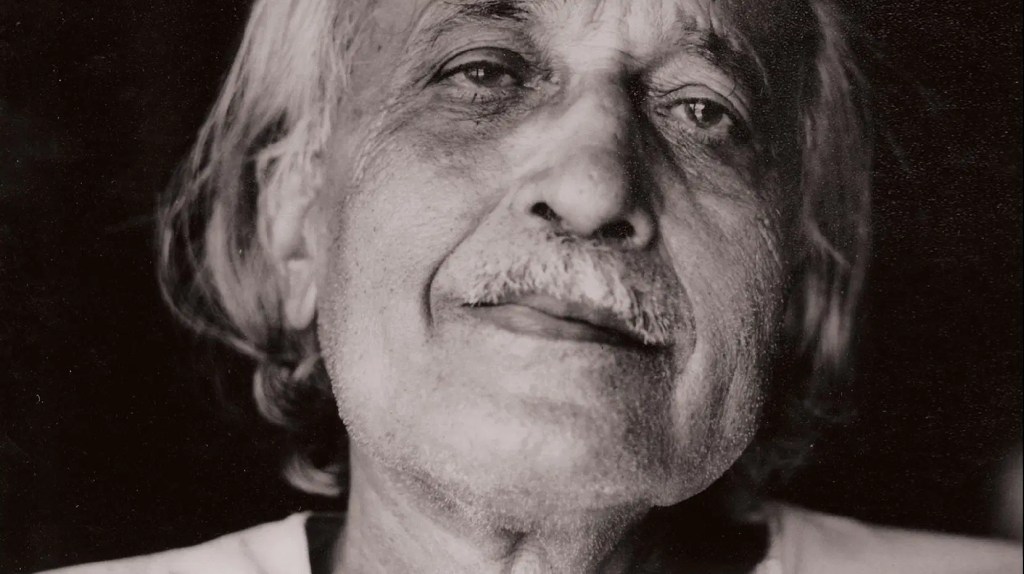
Great novels often attempt to offer an experience close to life, but only a few elevate it into the realm of the larger than life. Marali Mannige (Return to Earth in English, Mannum Manitharum in Tamil), written by K. Shivarama Karanth and published in 1941, is one such work. Spanning three generations in the village of Kodi in south coastal Karnataka, it leaves the reader in awe at the human struggle and their journey through time. The novel portrays human drama from the 19th to the 20th century—the most important period in Indian history culturally, socially, and politically.
The novel begins with a vivid description of Parvathi’s wedding with Raman Aithala on a stormy, rainy day. The opening chapter sets the tone for the rest of the novel with its graphic quality, minimal yet perfect writing, and, most importantly, the struggles women endure. The reader feels as if they are walking through slush and drenched to attend the wedding on that rainy day. Like a naturalistic painting with its precision and accuracy, this chapter works as a premonition of the life the characters will experience in the rest of the novel. Considered one of the best realistic/naturalistic literary works in India, Karanth remains completely detached in narrating the events—irrespective of their gravity—mimicking time itself witnessing the ever-changing universe.
The time and space in which the novel is set naturally cover many aspects of life: patriarchy, the conflict between tradition and modernity, changing socio-economic conditions, and more. But instead of analysing everything, I want to look into a couple of things that intrigued me in this novel. The characters are not only conditioned by patriarchy and orthodoxy; they also adhere to values and virtues. Even while upholding patriarchy, Raman Aithala lives by codified values he never questions. Parvathi endures patriarchal oppression in the name of tradition, and even the selfless Saraswati is no exception. They all face the ultimate test in Raman’s son Lachcha’s ethically nihilistic lifestyle, almost reminiscent of Svidrigailov in Crime and Punishment.
Lachcha poses a challenge to those who uphold social, religious, and economic values. Even his downfall (from a moralistic point of view) is not a conscious choice but remains a mystery. Raised lovingly by Parvathi in childhood, then by wealthy grandparents who gave him every imaginable luxury, he nevertheless degrades despite constant support. He rejects all moral and ethical values for no reason. To everyone else, he is a puzzle that cannot be solved. Ironically, he marries the self-sacrificing Nagamani—strikingly similar to Sonya from Crime and Punishment. Their paths remain a mystery in the novel. It is difficult to tell where exactly both characters lose their innocence. That was the turning point in their lives: one reduced to a purely biological existence, the other defined by high values. These two characters stand at opposite extremes of life.
When everyone fails before Lachcha, Nagu chooses to confront his nihilism by taking an idealistic, self-sacrificing stand. Nagamani’s journey is fascinating in the novel. As Lachcha chose wealth over values, Nagu chose values over wealth, in spite of coming from a wealthy family. The episode where Lachcha returns to convince her to transfer all the property in his name is reminiscent of Svidrigailov’s dialogue with Raskolnikov in Crime and Punishment:
“In spite of Avdotya Romanovna’s real aversion for me, and my persistently gloomy and forbidding aspect, she grew sorry for me at last, sorry for a lost soul. And when a girl’s heart begins to feel pity for a man, then of course she is in the greatest danger.”
Her resolve is partially influenced by selfless, hardworking Saraswati, but her choice to stay at her in-laws’ house, later to stay with Saraswati till her death, or to return and reclaim the house—all reflect her conviction to live an ideal life shaped by betrayal. After Lachcha abandons her and sells all the property, she chooses to endure hardship rather than compromise her principles.
Saraswati is like Bhishma in the Mahabharata or Úrsula in One Hundred Years of Solitude—one who witnesses the whole drama, even after losing her vision. She finds her salvation in an unbelievably selfless, unmaterialistic life. Yet, like any other character in the novel, she is portrayed humanistically, with flaws. In fact, her suggestion to move Lachcha out of his grandparents’ house is the beginning of his moral decline. Saraswati is among the rare characters in the novel whose story arc concludes without bitterness, despite enduring immense struggle.
Strictly following the naturalistic literary tradition, man’s life is defined by scientific, economic, and hereditary factors; there is no free will. But this is where Marali Mannige differs. Both Nagamani and her son’s choice to return to the village is a conscious decision—towards nature. It is a romanticised idealisation of values. Ram, the grandson, is none other than Shivarama Karanth himself. This novel is semi-autobiographical, with parallels between its characters and people he knew in life. Ram, a bright young man, carries the ocean within him wherever he goes. Despite yearning for financial stability, his mind wavers between nationalism and socialism. Wealth did not stop Lachcha from going astray, just as extreme poverty did not stop Ram from being socially aware and active—two sides of the same coin. Yet Ram is the one who dealt with his nihilistic father more successfully than others, reflecting the changing family values of the time. His quest for art is intriguing: he saw the ocean in art and heard the ocean in music. Though Nagu learned music, it never brought her solace; Ram, however, discovers nature in both music and art. Towards the end of the novel, the reflections of palms after a light shower by the seashore ease his turbulence and confusion. This is deeply Advaitic, where the character loses all duality.
In this larger-than-life epic, Shivarama Karanth creates the house almost as a central character. It was reluctantly built by Raman Aithala but fuelled by jealousy. Everyone wants to return to that house or refuses to leave—it is a symbolic pride for some, a physical manifestation of value for others—except Lachcha, who views it as simple, disposable wealth. Every life is defined by it in some way. The irony is that the Aithala family suffered for three generations, struggling economically while living in a house where cash, money, and gold coins were hidden in the walls by Raman Aithala. Being poor in a house hiding wealth is both oxymoronic and symbolic. Whenever the family goes through a crisis, the house plays an important role. Just as the house anchored everyone, so too did Saraswati, Parvathi, Sathyabhama, and Nagamani, who anchored the family throughout the years. Like a hidden treasure, they rescued the family whenever it was in crisis.
Karanth created an epic saga not through heroic exploits but with simple, ordinary people we face in our day-to-day life, especially through women who endure struggle and rise above every catastrophic turn in their lives. His leaning towards idealism transforms this naturalistic work into a transcendental space. It symbolises human resilience as a tool for transcendence.
 Neraval
Leave a comment